
By Max Milano (Travel Writer & Photographer)
Every April, a certain kind of expat arrives in Valencia, sun-kissed and looking for the shore, but I am not talking about the humans who fill the cafés in Benidorm with their flamingo-like sunburns and lager, I am talking about the real flamingos that come back to the Albufera lagoon south of Valencia and farther down to the salt lakes of Santa Pola. They arrive from Africa, from a place where the desert meets the sea, where the flamingos feed on brine shrimp under a Saharan sun, dreaming of Spain, and then one day they lift off and they come north, and April in Valencia begins because the pink flamingos are here.
I feel a special tenderness for these birds, perhaps because I am an expat too, from California, and now also washed up on the Spanish Mediterranean coast, so I feel that I understand them. Every April, when word spreads that the flamingos are back, I load the car and drive south to Santa Pola with my trusty five-hundred-millimeter Canon lens. I drive through orange groves and past Moorish castles until the salt lakes of Santa Pola appear, shimmering under the hard Spanish sun, with salt mountains and mirrors of water and heat that bend on the horizon, and then you see them, pink, hundreds sometimes, dipping in the wet, salty glare of the salt flats. No bird should look that elegant and that absurd at once.
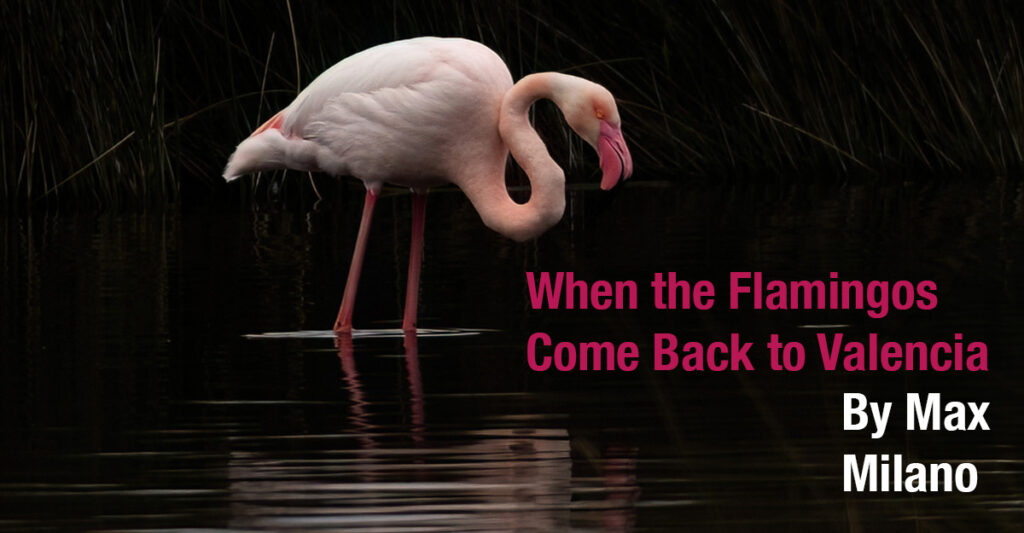
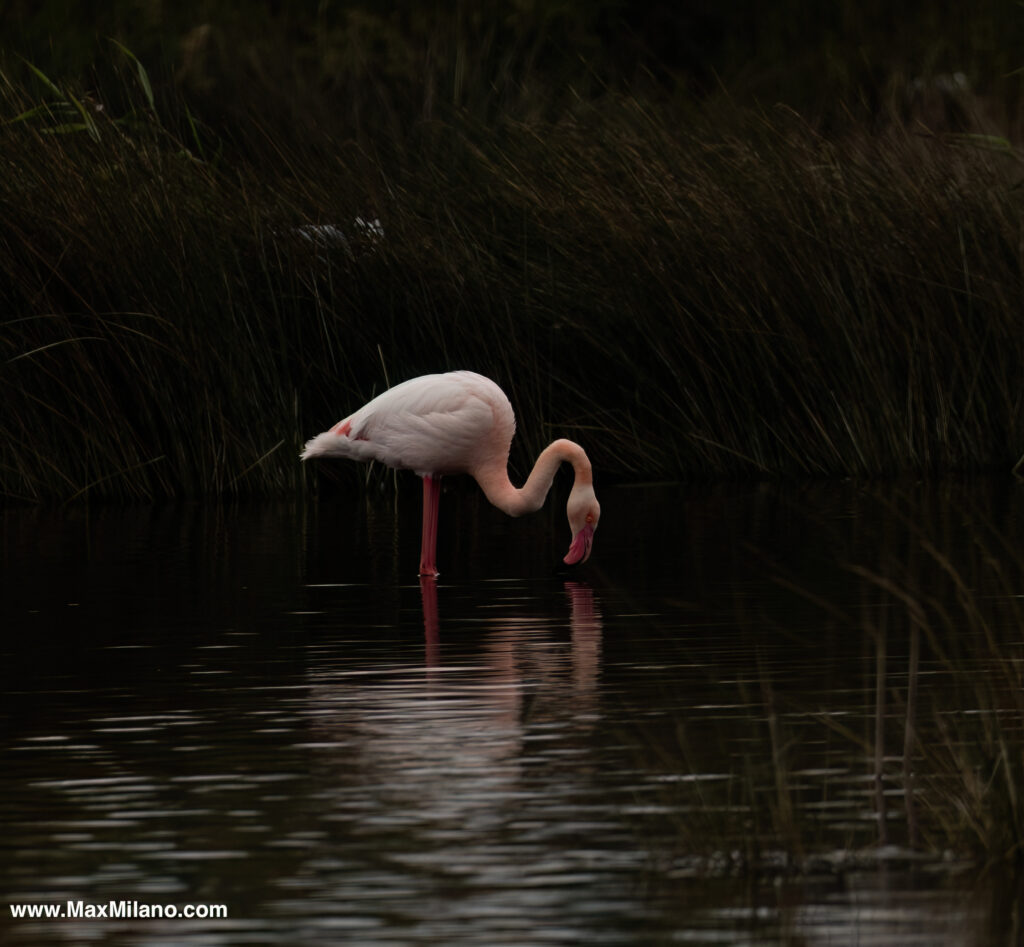
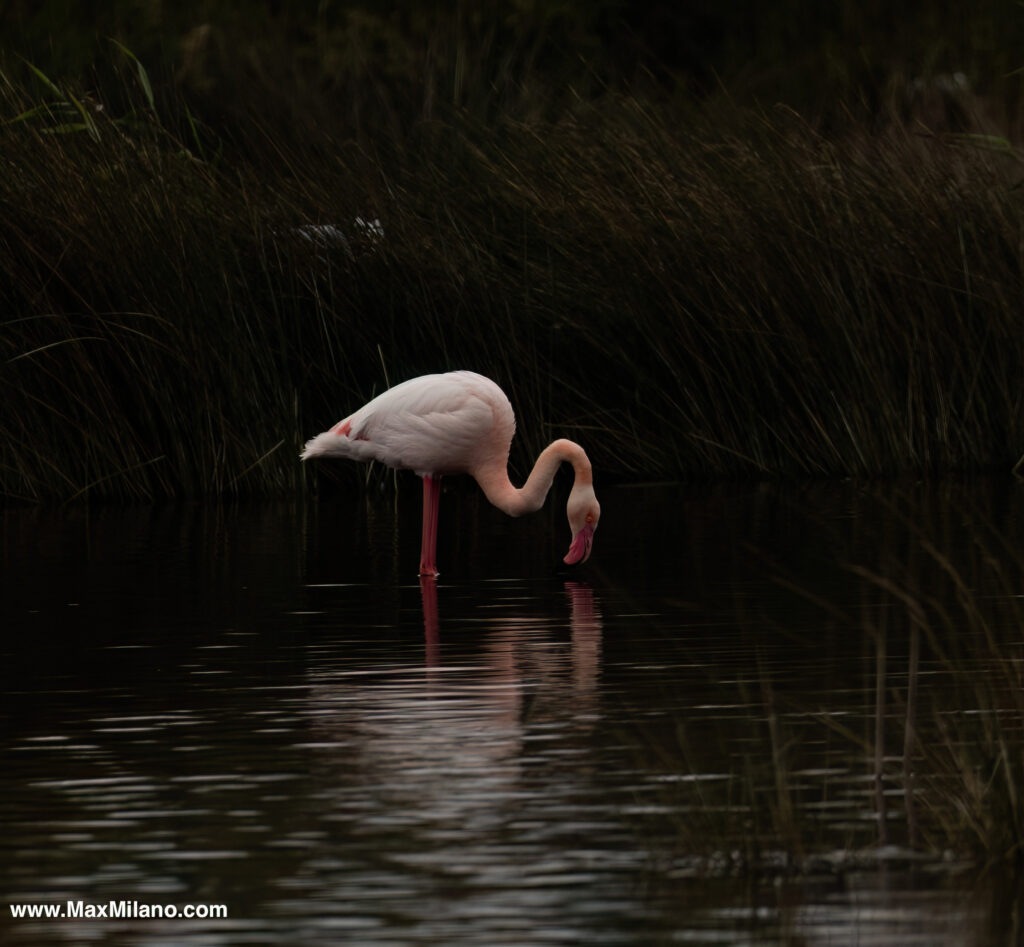
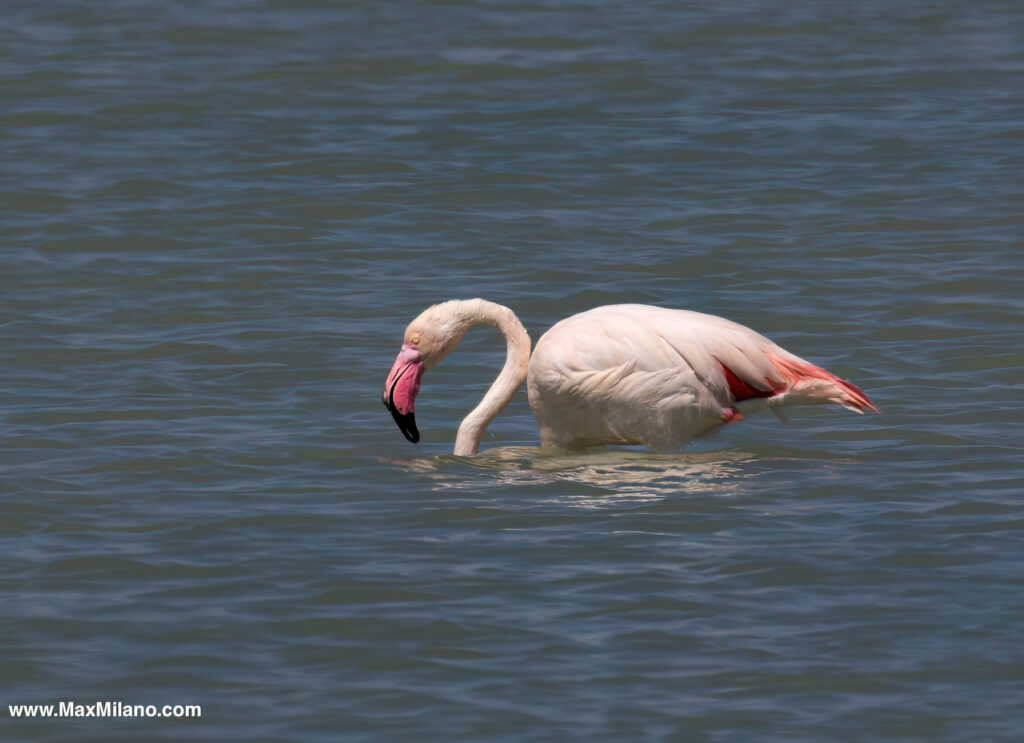
People think flamingos are delicate, but they are not, they’re ancient shrimp-eating machines, as they stomp through the mud of the salt flats with those impossibly thin pink legs and stir the bottom until they unfold their serpent necks and dip their heads upside down into the briny water to feed, always upside down, a bird feeding in reverse, as if evolution had a glass of wine one night and decided to improvise. They eat brine shrimp, algae, and little crustaceans, and that is where the pink comes from, because you are what you eat, and as the flamingos eat shrimp, they become rose-colored royalty. As I set up my tripod and camera and watch them feed, I wonder where they were a few weeks ago, in Mauritania perhaps, and then I wonder whether Mauritanian shrimp is better than Spanish shrimp, and whether flamingos have opinions on the matter, and whether they miss Africa, because a photographer has too much time to think while waiting for wings.
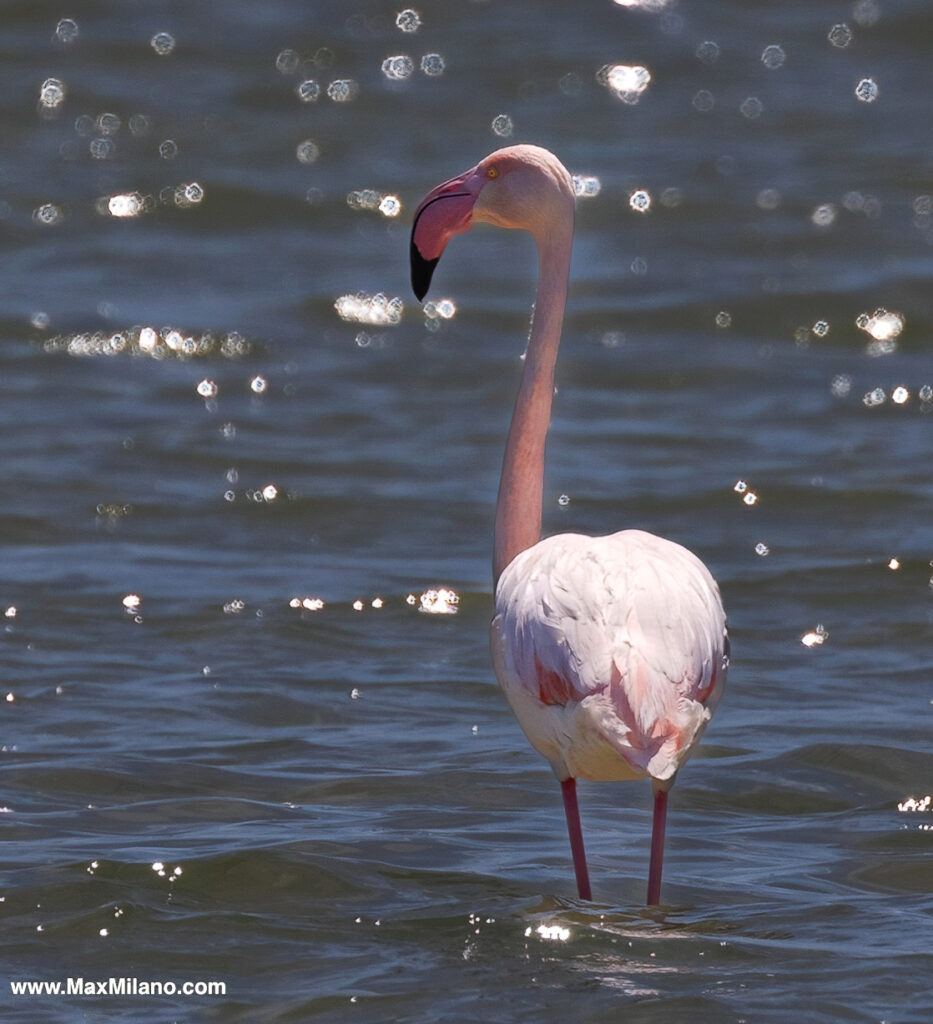
Santa Pola has a light unlike anywhere else, sharp but silver, and it slides over the salt ponds and catches their feathers as the sun gleams in the flats until water and sky become the same thing, and the flamingos stand so still that they seem painted, and then one moves, and another answers, and a ripple passes through the flock, and suddenly there are wings, pink-tipped wings unfolding, and you remember that these creatures are not ornaments but travelers.
After shooting all morning, we drive to a beach overlooking Tabarca Island, where there is a pull-off by the side of the road, and we park under a palm tree beside a strip of rock instead of sand. There’s no postcard beach there, but it is better, a rocky coast, and the sea is transparent like glass over stone, and we watch the ferries drift slowly toward Tabarca Island, as we sit on the rocks and eat our lunch of baguette and cream cheese, with the salt wind in our faces and seagulls overhead. There is a roadside shrine nearby dedicated to some Virgin, surrounded by cactus, and the whole place feels strangely like Baja, Mexico.
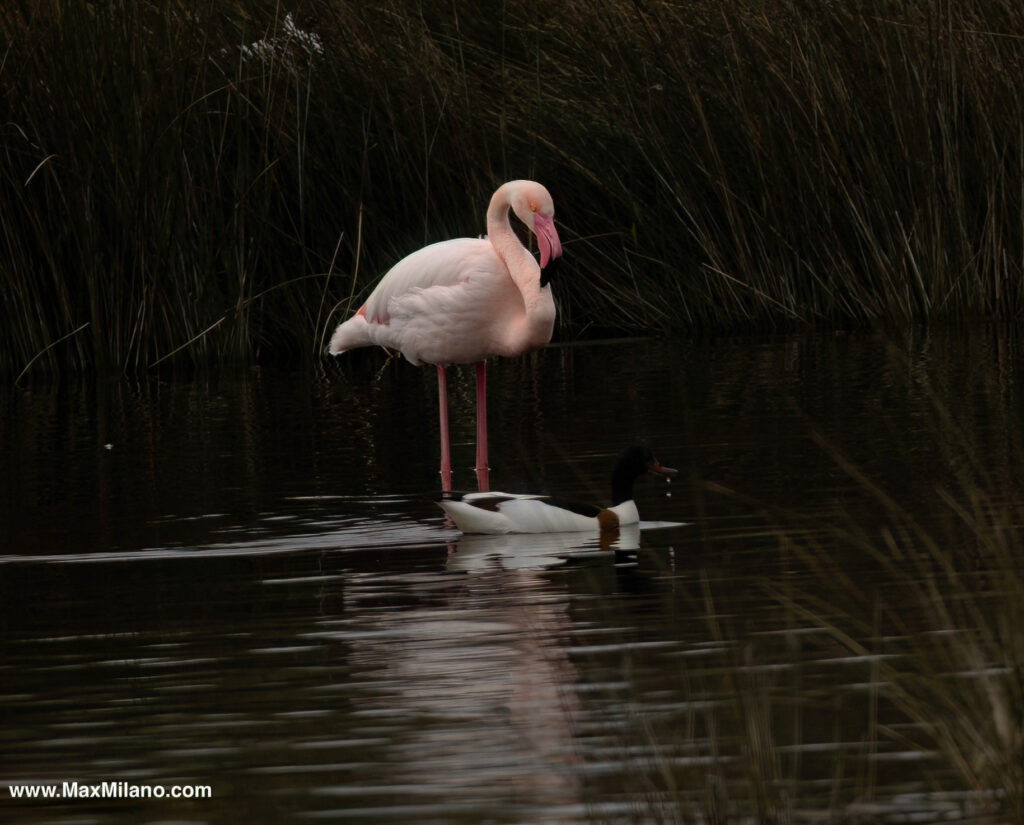
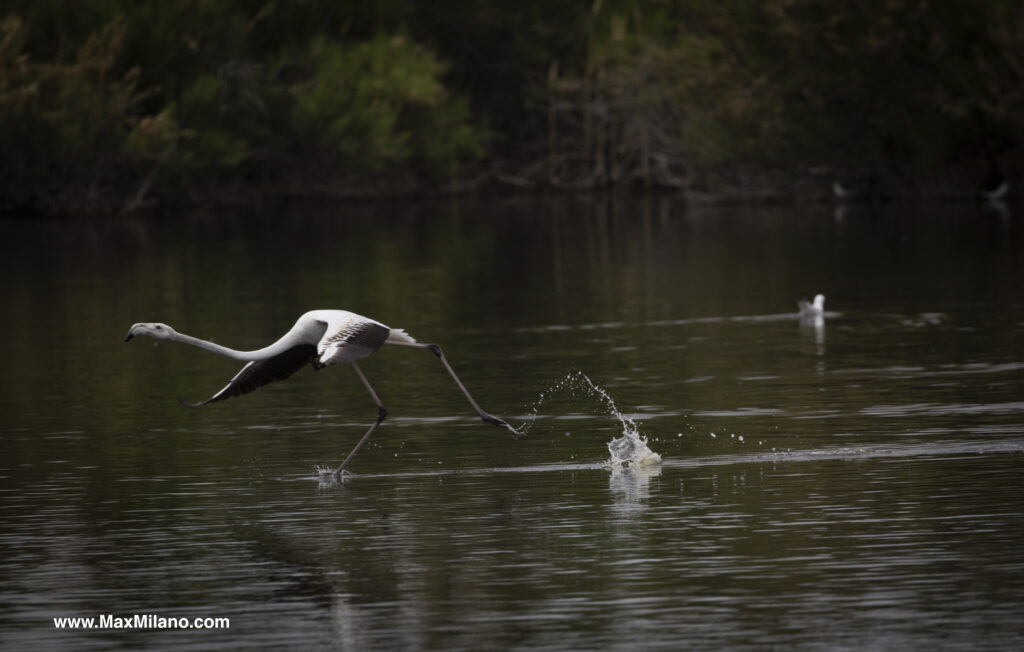
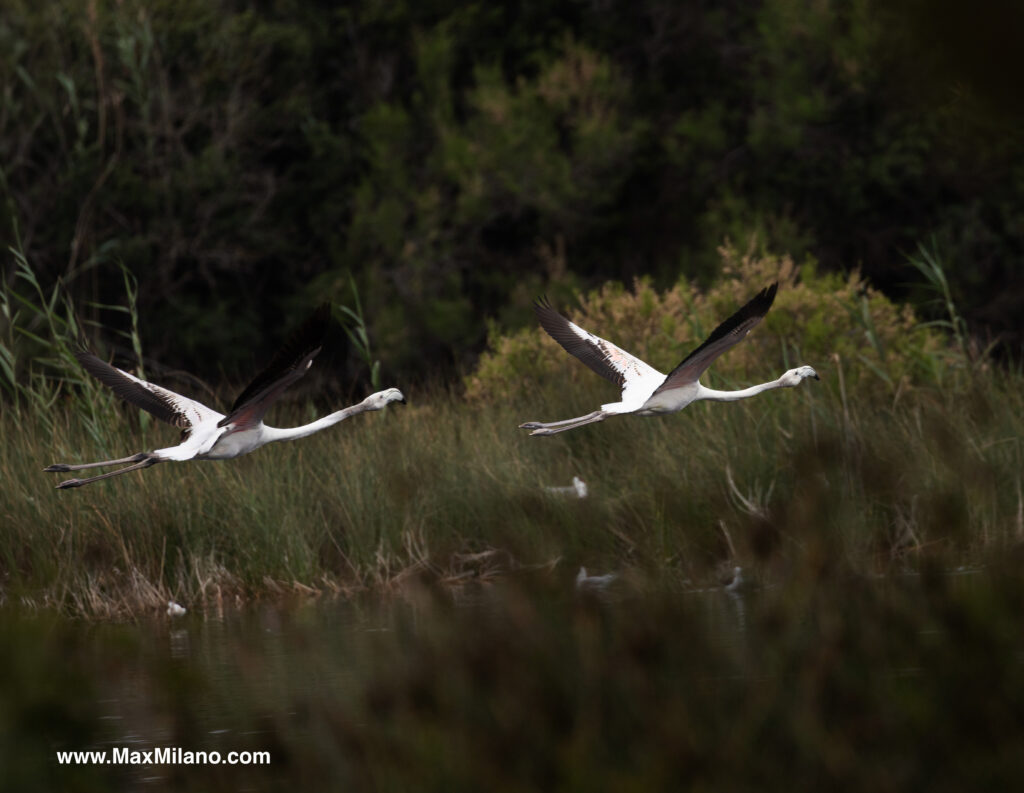
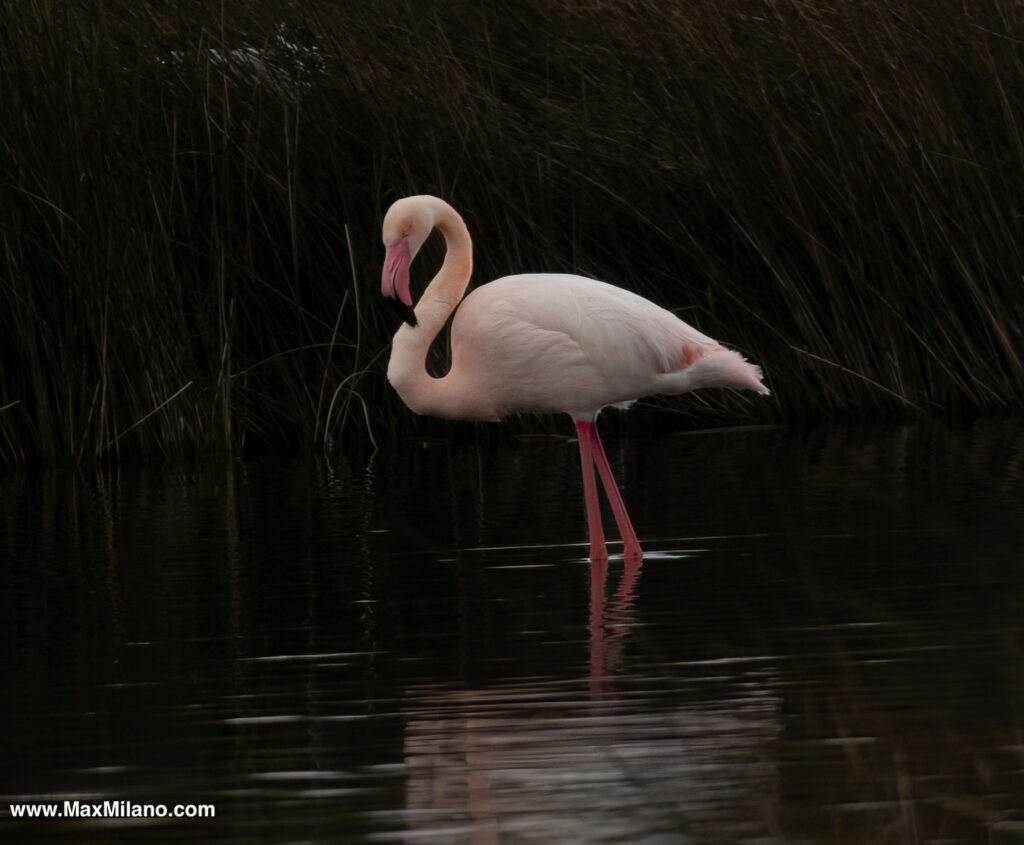
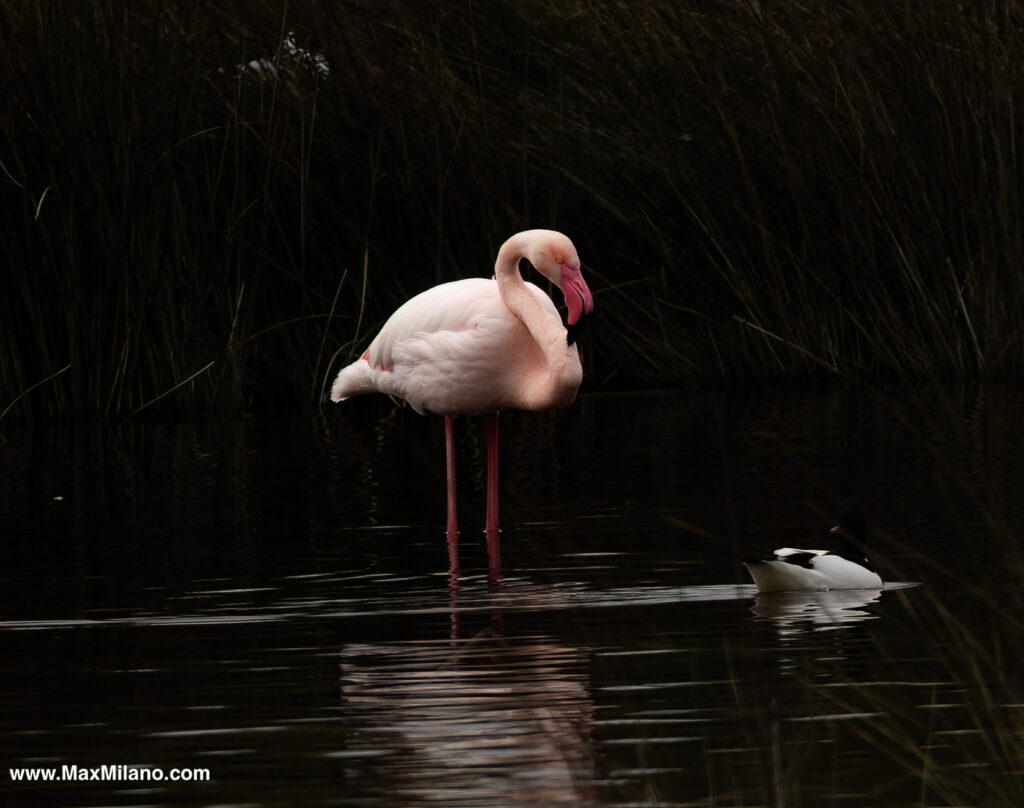
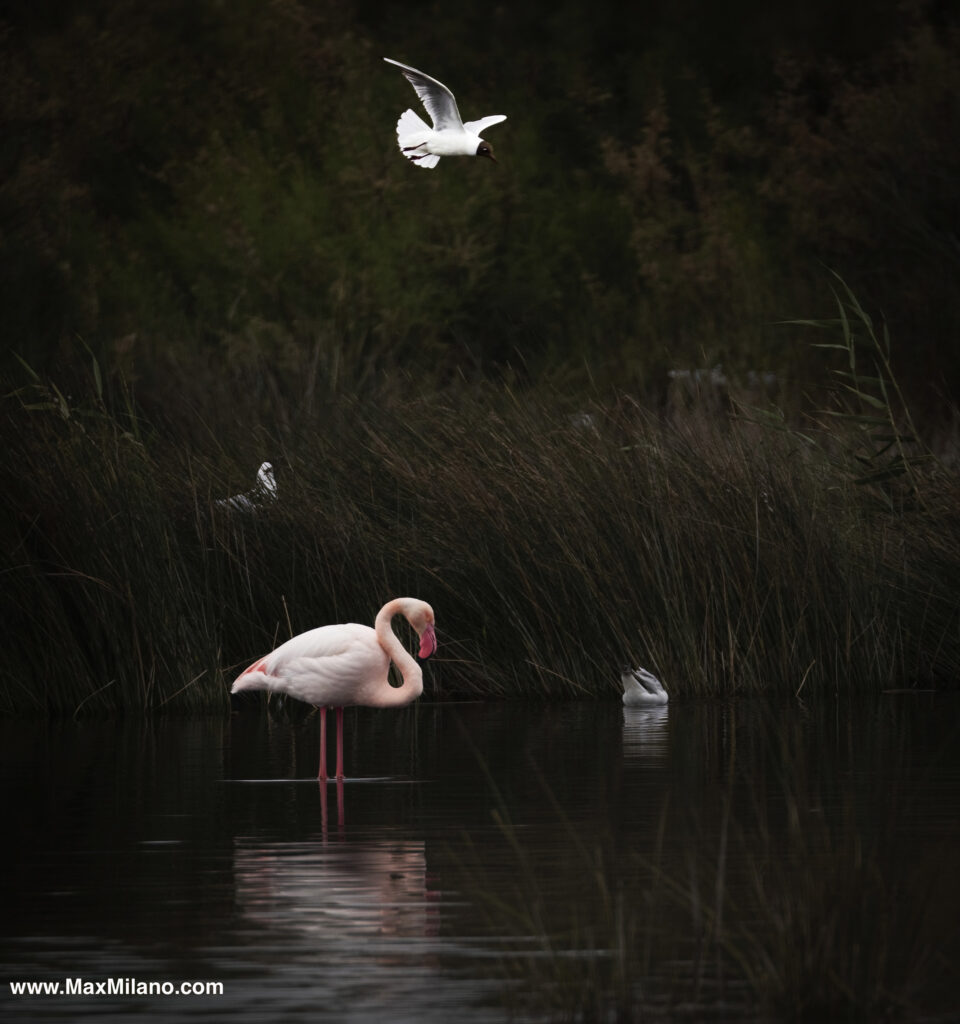
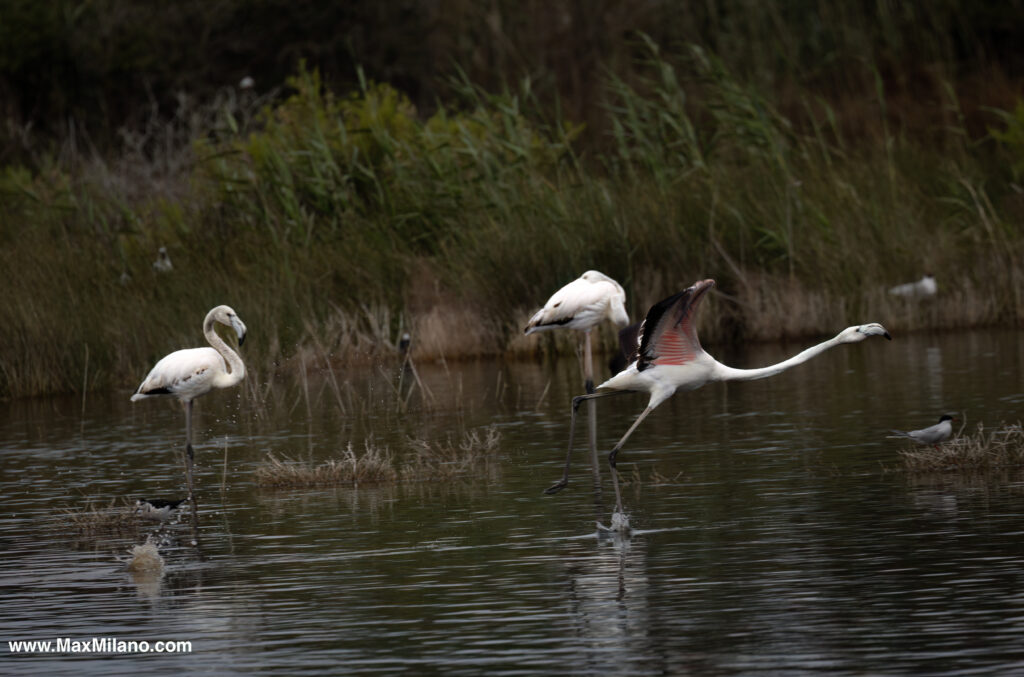
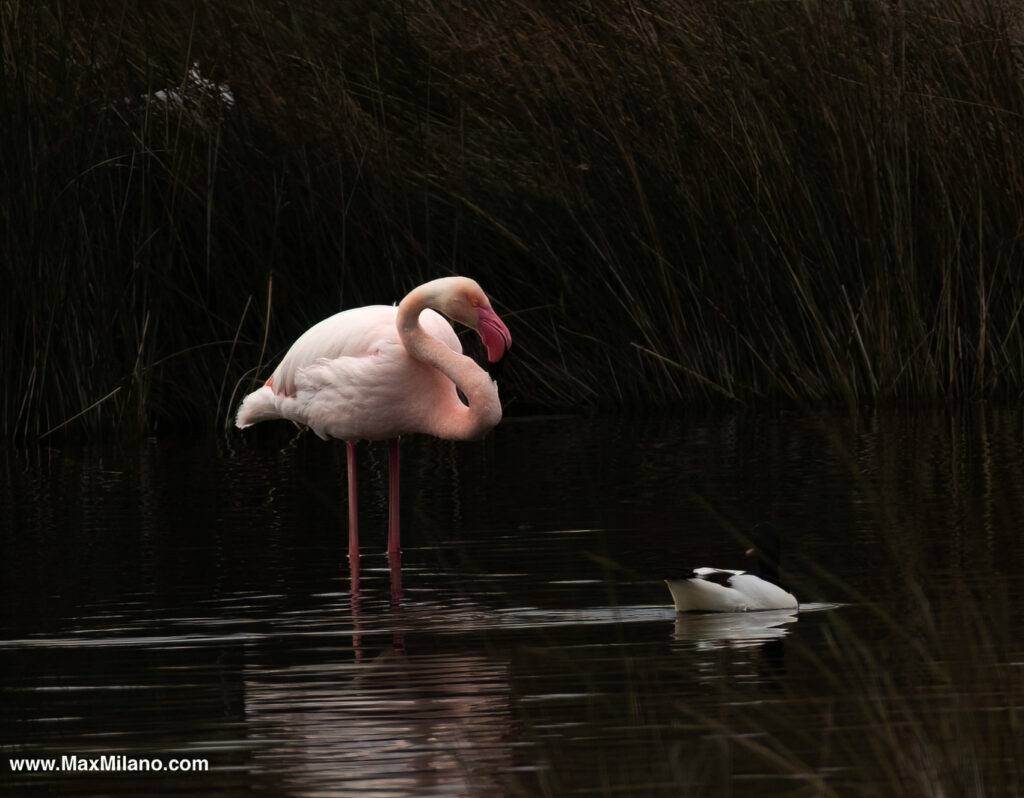
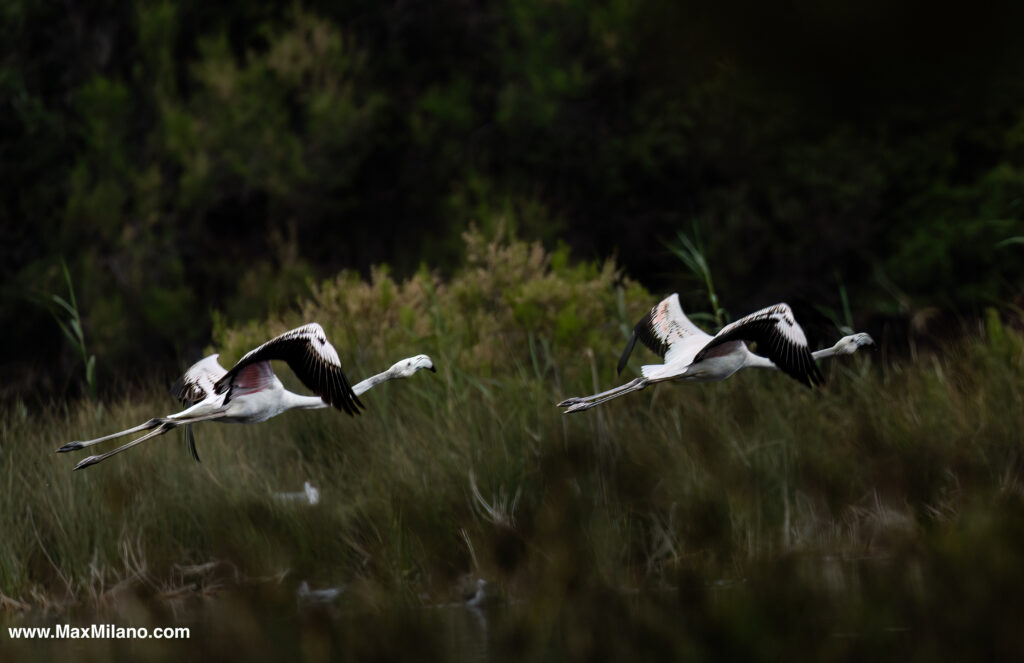
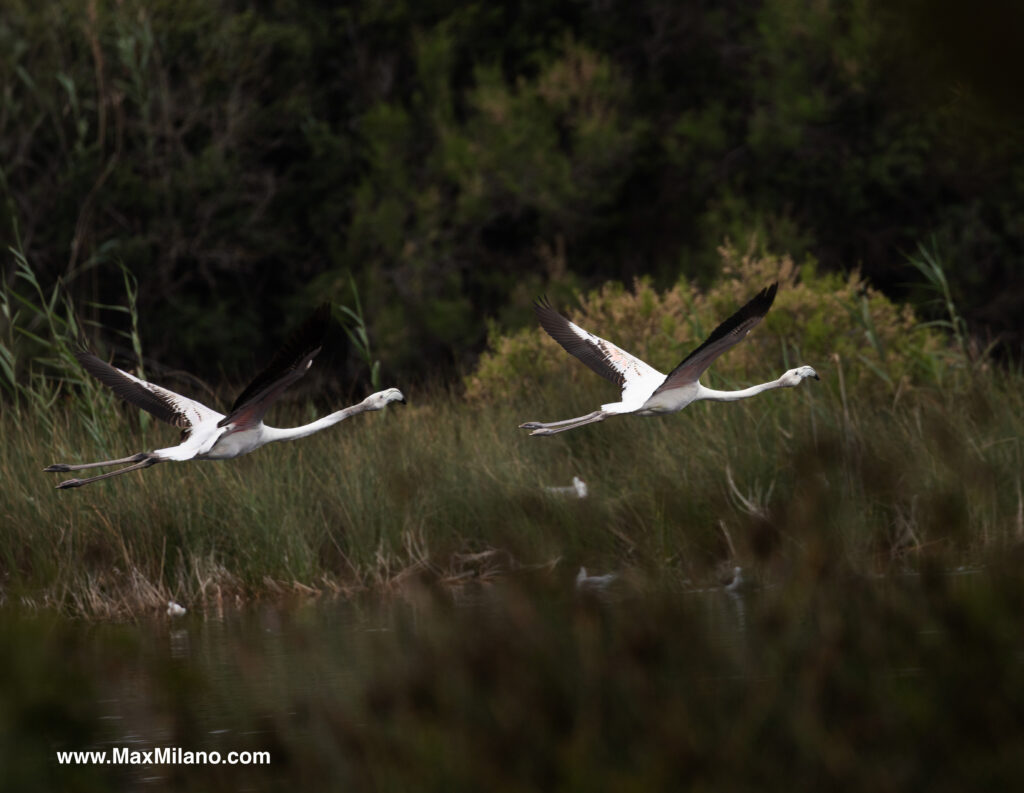
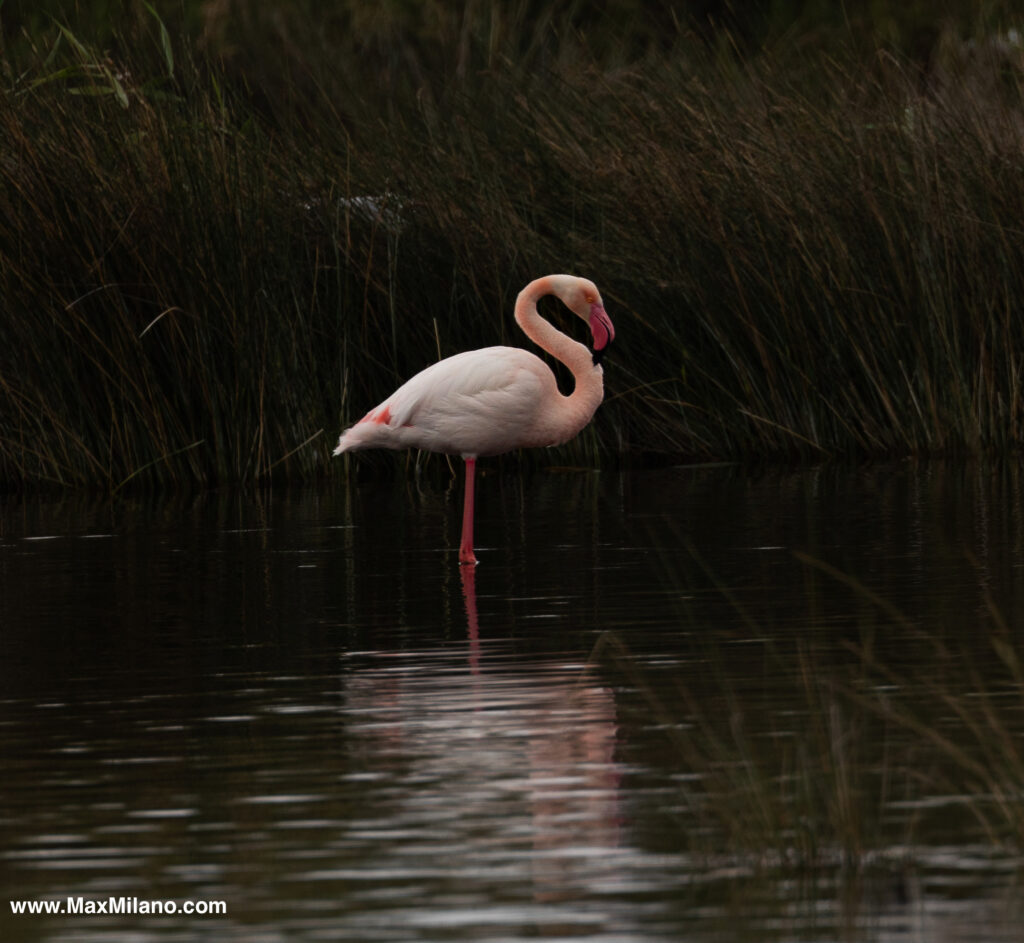
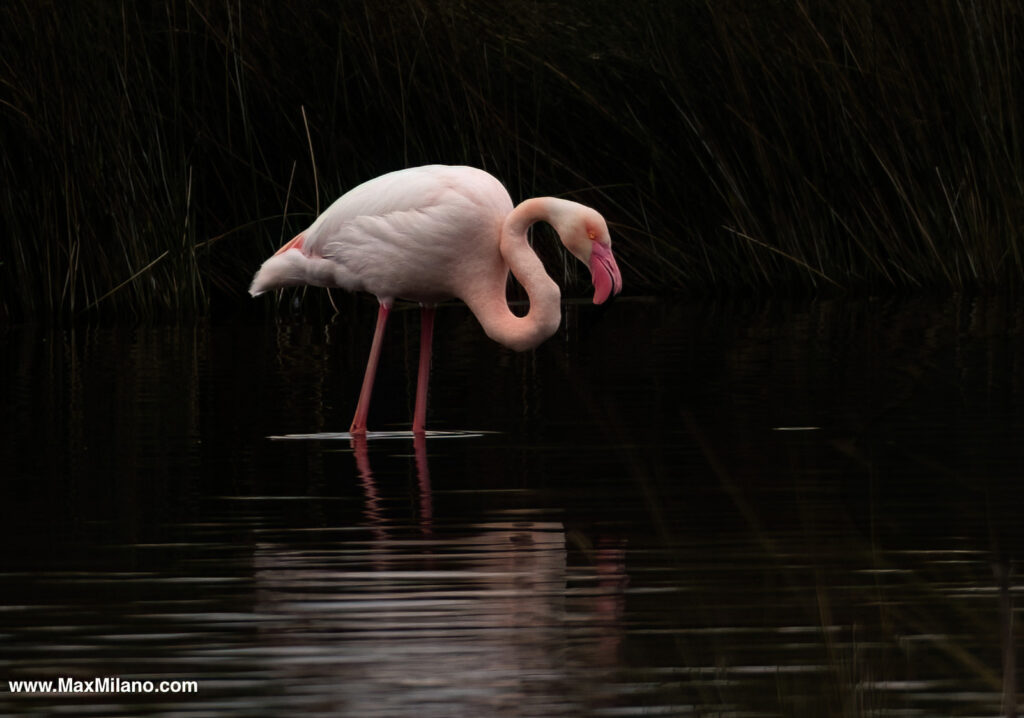
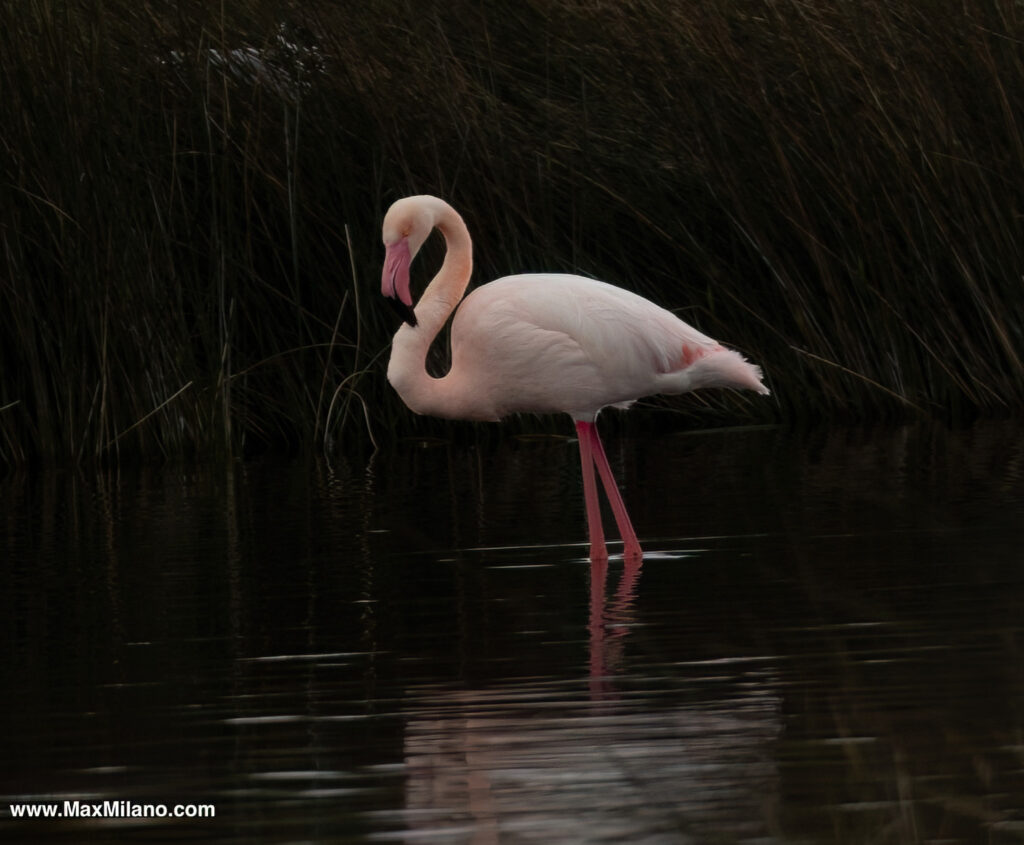
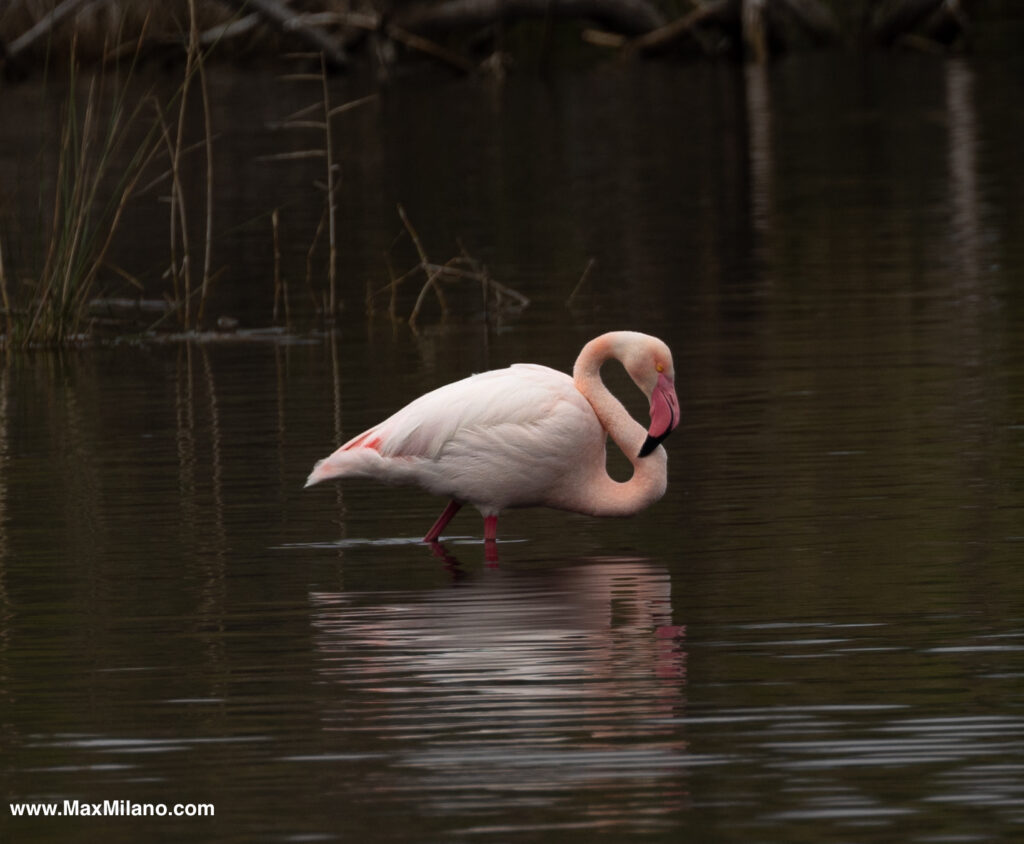
After lunch, we drive north toward Valencia to the Albufera lagoon, and the landscape changes, because Santa Pola feels open and bright while the Albufera feels darker and primordial, with its rice fields and its reeds and mud flats and its bird calls, and the murky water is dark enough that you could believe dinosaurs once drank here, and maybe they did. This is where we find the one pink flamingo, surrounded by prehistoric-looking stone-colored ones. The pink flamingo stands in the middle like a queen bee, with the other gray birds clustered around her, restless and awkward, while the pink queen stands composed in the center, impossibly cream-pink in color, acting aloof and sleepy.
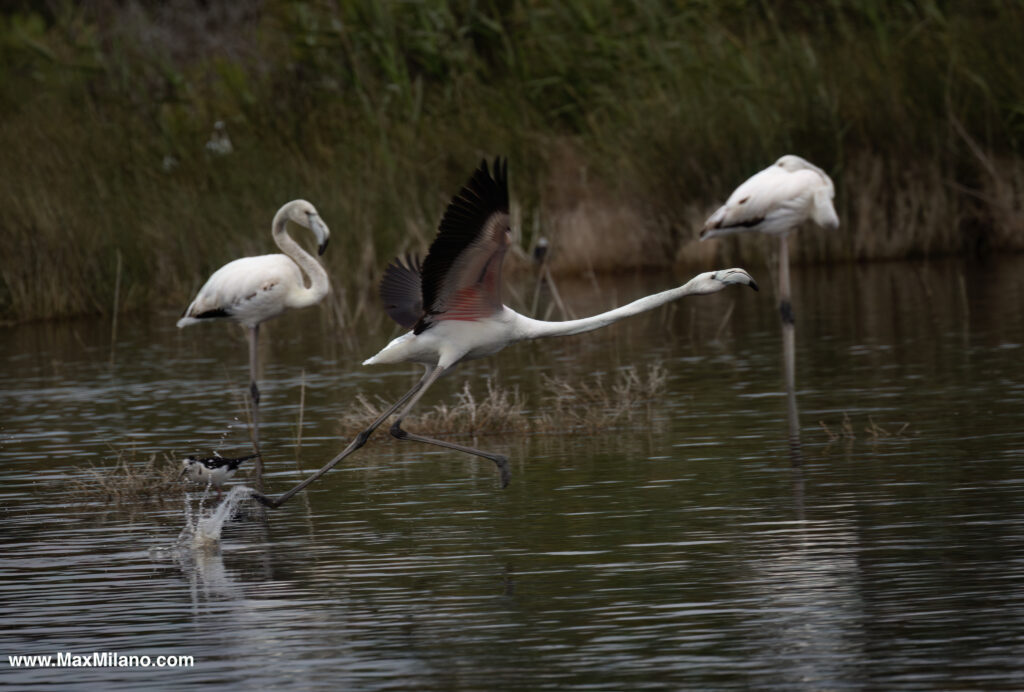
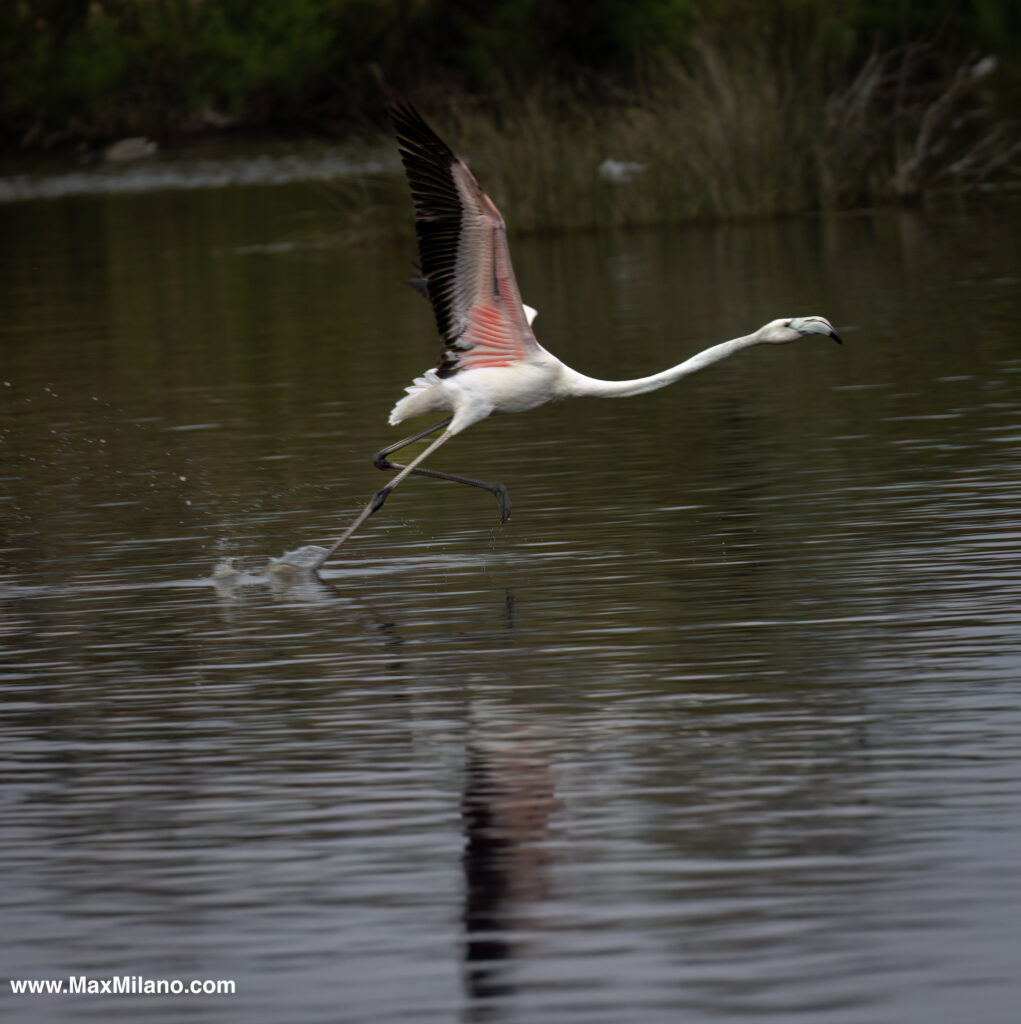
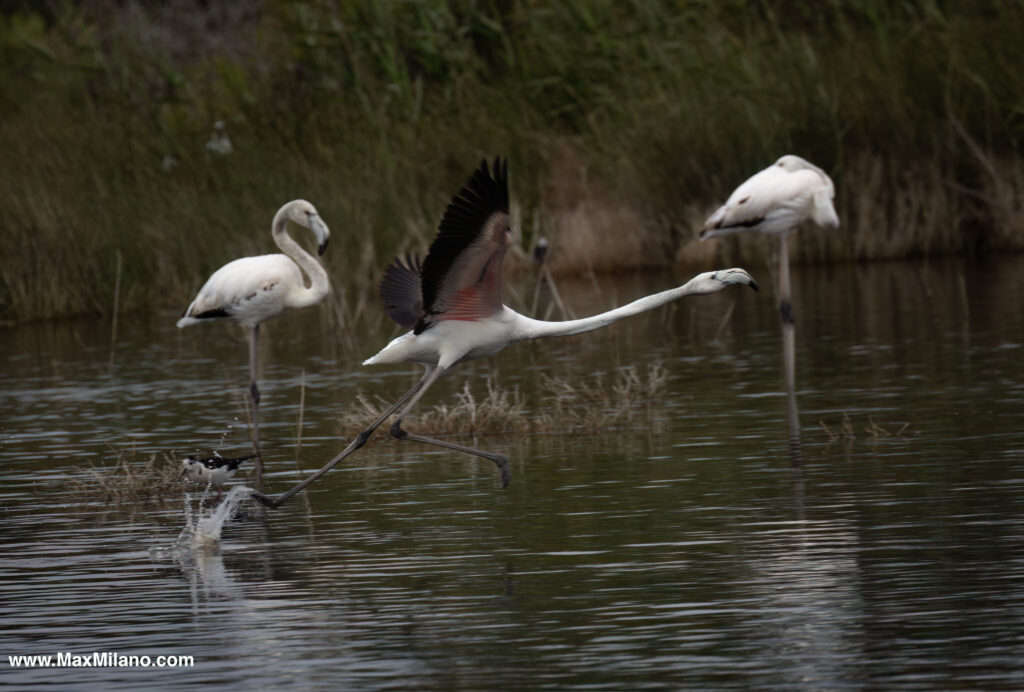
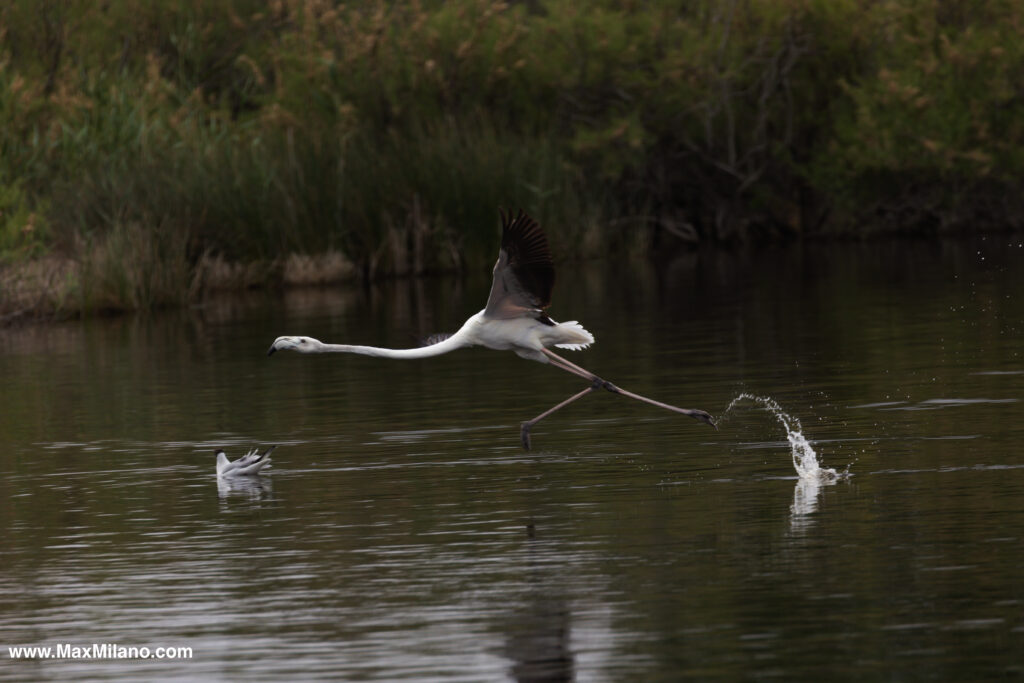
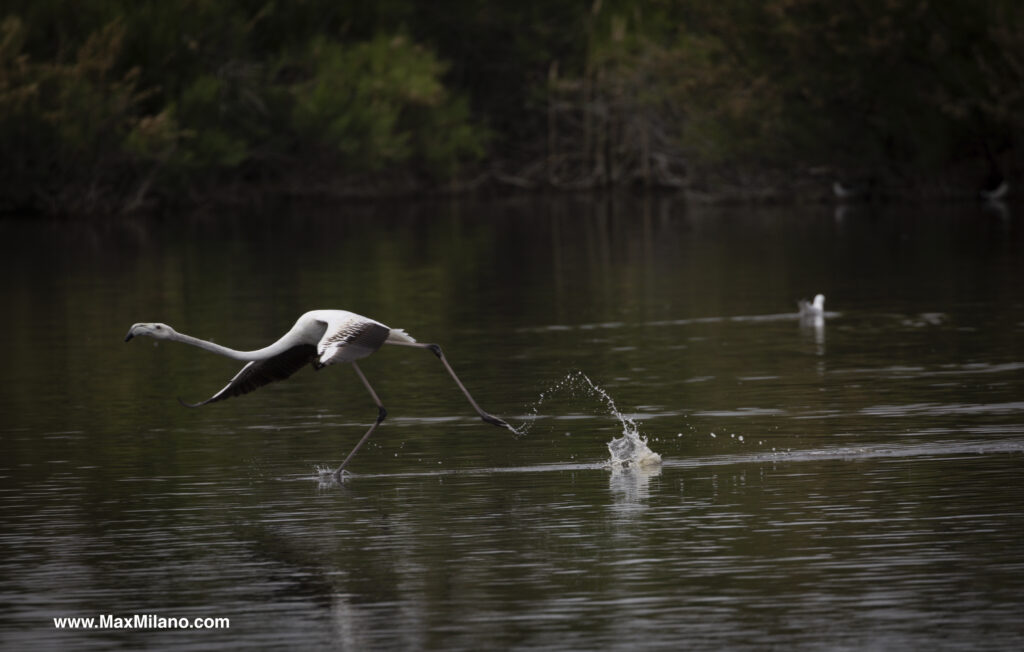
The gray flamingos begin to stir, one large one spreads its wings, massive and dark, and begins skipping over the water with spray rising behind it, followed by another, and then another, and suddenly these waders become airborne, flying dinosaurs, as I track them through my 500-millimeter lens as they take off over the lagoon with their long necks forward and their long stick-like legs trailing behind. They look skinny and impossibly prehistoric against the marsh, like things older than memory.
As dusk falls over the Albufera, the lagoon darkens almost to black, and the reeds sway as the air cools and the flamingos become silhouettes and then ghosts. There is a silence after the birds settle for the night, and I think how lucky we are to live where flamingos return each spring, to watch these birds arriving from Africa to feed upside down and fly like relics who dream of shrimp. The flamingos don’t care that we find them beautiful, and that may be why they are beautiful and goofy at the same time. The best kind of beauty.
Max Milano is a travel writer and photographer based in Los Angeles, California, and Valencia, Spain. His latest photography book, Mexico City Noir, Life Under The Volcanoes, is Available on Amazon. His photographs are available at MaxMilanoPix.